Swimming is one of the best full-body exercises you can do. It improves cardiovascular health, builds muscle strength, and increases endurance while being gentle on the joints. Because of these benefits, swimming is a great activity for people of all ages and fitness levels.
If you are new to swimming, getting started may feel intimidating. However, with the right guidance and a little practice, anyone can learn to swim and enjoy the many benefits it offers.
This beginner’s guide will help you understand the basics of swimming and how to start safely.
Why Swimming Is Great for Beginners
Swimming is a low-impact exercise, which means it puts less stress on your joints compared to activities like running. This makes it ideal for beginners and people recovering from injuries.
Some key benefits of swimming include:
Improves heart and lung health
Strengthens the entire body
Helps burn calories and manage weight
Reduces stress and improves mental well-being
Improves flexibility and endurance
Swimming is not only a workout but also a life-saving skill.
Essential Swimming Gear for Beginners
Before jumping into the pool, it’s important to have the right equipment. While swimming doesn’t require much gear, a few items can make learning easier and more comfortable.
Basic swimming gear includes:
Swimsuit: Comfortable and flexible swimwear designed for water activities
Goggles: Protect your eyes and help you see underwater
Swim Cap: Keeps hair out of your face and reduces drag in the water
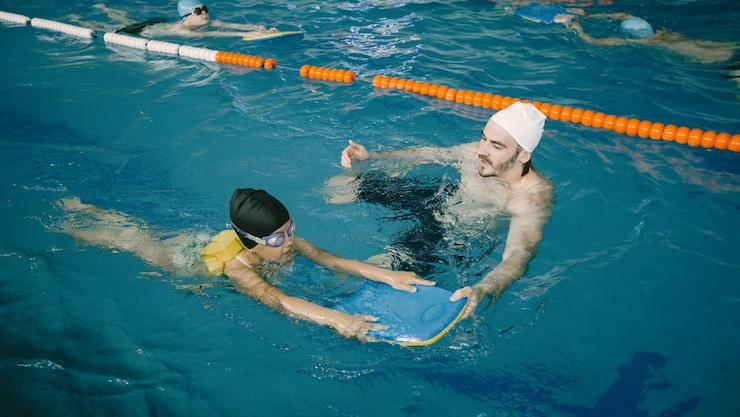
Kickboard: Useful for practicing kicks and building leg strength
These simple items can make your swimming sessions more enjoyable.
Learn Basic Breathing Techniques
One of the biggest challenges for beginner swimmers is learning how to breathe properly in the water.
A simple breathing technique is:
Inhale through your mouth when your head is above water.
Exhale slowly through your nose or mouth when your face is in the water.
Practicing breathing techniques regularly will help you stay relaxed and maintain a steady rhythm while swimming.
Start with Basic Swimming Strokes
As a beginner, you don’t need to learn every swimming style immediately. Start with simple strokes and gradually improve your technique.
Some beginner-friendly strokes include:
Freestyle (Front Crawl)
This is the most common and fastest swimming stroke.
Breaststroke
A slower and more controlled stroke that is great for beginners.
Backstroke
Swimming on your back helps you breathe easily and stay relaxed in the water.
Focus on learning one stroke at a time and improving your technique.
Practice Floating and Water Confidence
Before swimming long distances, it’s important to feel comfortable in the water.
Start by practicing:
Floating on your back
Floating on your stomach
Gentle kicking while holding the pool edge
These exercises help build water confidence and improve balance.
Follow a Simple Beginner Training Routine
If you are just starting, keep your swimming sessions short and manageable.
Example beginner routine:
Warm-up:
5 minutes of easy swimming or kicking with a kickboard.
Practice:
4–6 short laps focusing on technique.
Rest:
Take short breaks between laps.
As your endurance improves, you can gradually increase the number of laps.
Always Follow Pool Safety Rules
Safety should always be your top priority when swimming.
Important safety tips include:
Never swim alone
Swim in designated areas or pools
Listen to lifeguards and follow pool rules
Avoid pushing yourself beyond your limits
Being aware of safety rules ensures a fun and safe swimming experience.
Stay Consistent and Be Patient
Learning to swim takes time and practice. Don’t worry if you don’t feel confident right away.
Try to swim two to three times per week and focus on gradual improvement. Over time, you will become more comfortable and efficient in the water.
Remember, every skilled swimmer started as a beginner.
Final Thoughts
Swimming is an excellent activity that improves both physical and mental health. By starting with basic techniques, using proper gear, and practicing regularly, beginners can quickly develop their swimming skills.
Take your time, stay patient, and enjoy the learning process. With consistent practice, swimming can become one of the most rewarding and enjoyable forms of exercise.